| Movies/TV | |||
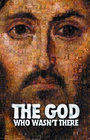
| "The
God Who Wasn't There"
|
Brian Flemming's documentary examines the similarity of the Jesus story to other savior myths throughout time, and points to inexplicable gaps in early Christian history that combine to shed doubt on the Bible's Jesus story. | ||
|
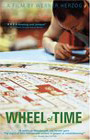
"Wheel of Time"
|
German filmmaker Werner Herzog captures the faith of thousands on an annual pilgrimage to Bhod Gaya, the Indian village in which the Buddha attained enlightenment. Structuring his documentary around the Kalachakra initiation - a fascinating 12-day ordainment process for Buddhist monks involving the creation of a large "wheel of time" mandala out of colored sand, a two-dimensional a visualization of the entire universe and all the atoms therein, as well as within our own bodies, and the inseperable nature of all. | ||
| Books | |||
|
"The Quantum & the Lotus"
|
This fascinating dialogue reveals how the ancient philosophical ideas of Buddhism can be joined harmoniously with the revelations of the most cutting-edge science of today, the science of quantum physics, and how together they can offer powerful answers to the most beguiling questions about life. The authors discuss how their different perspectives shed similar light on a series of fundamental questions about the nature of existence, the meaning of life, and the future of the universe. They delve into such intriguing topics as the reality of the "self" and the "world", the essence of time and of causality, the laws of nature, and the meaning of existence. What emerges is an extraordinary vision of the universe as one that is neither totally governed by hard physics nor solely theistic and spiritual in nature. The authors steer a middle course between the idea of a universe that is devoid of meaning -- the view of most astronomers -- and the notion that the universe is the product of creator. The scientist describes the universe as a cosmos, created by a pervasive organizational principle, or life force. The Buddhist proposes a vision of a universe that has evolved to be naturally harmonious. Though their views differ in emphasis and the language used to describe concepts, they reach a remarkable meeting of the minds about the ultimate view of why we are here. They also succeed in escaping the "either-or" exclusivity so typical of the traditional confrontation between science and religion. |
||
|
"Is Religion Killing
Us?"
|
Nelson-Pallmeyer challenges the understanding of power that lies at the heart of the sacred texts of Judaism, Christianity, and Islam. He argues that nonviolence is powerful and necessary and that a viable future for human beings and the planet depends on challenging the ways in which sacred texts reinforce visions of power that are largely abusive. A viable future, he says, depends on re-visioning God's power. |
||
|
"The Blind Watchmaker:
Why the Evidence of Evolution Reveals a Universe Without Design"
|
The notion of a universal watchmaker belongs to the eighteenth-century theologian William Paley, who made one of the most famous creationist arguments: Just as a watch is too complicated and too functional to have sprung into existence by accident, so too must all living things, with their far greater complexity, be purposefully designed. It was Charles Darwin's brilliant discovery that put the lie to these arguments. But only Richard Dawkins could have written this eloquent riposte to the creationists. Natural selection - the unconscious, automatic, blind, yet essentially nonrandom process that Darwin discovered - has no purpose in mind. If it can be said to play the role of watchmaker in nature, it is the blind watchmaker. Acclaimed as perhaps the most influential work on evolution written in this century, The Blind Watchmaker offers an engaging and accessible introduction to one of the most important scientific discoveries of all time. |
||
|
"The End of Faith"
|
* Winner of the 2005 Pen Award for Non-Fiction In the End of Faith, Sam Harris delivers a startling analysis of the clash between reason and religion in the modern world. He offers a vivid, historical tour of our willingness to suspend reason in favor of religious beliefs -- even when these beliefs inspire the worst of human atrocities. Harris argues that in the presence of weapons of mass destruction we cannot expect to survive our religious differences indefinitely. Most controversially, he argues that "moderation" in religion poses considerable dangers of its own, as the accommodation we have made to religious faith in our society now blinds us to the role that faith plays in perpetuating human conflict. While warning against the encroachment of organized religion into world politics, Harris draws on insights from neuroscience, philosophy, and Eastern mysticism to deliver a call for a truly modern foundation for ethics and spirituality that is both secular and humanistic. |
||
|
"Sense and Goodness
Without God: A Defense of Metaphysical Naturalism"
|
If God does not exist, then what does? Is there good and evil, and should we care? How do we know what's true anyway? And can we make any sense of this universe, or our own lives? Sense and Goodness answers all these questions in lavish detail, without complex jargon. A complete worldview is presented and defended, covering every subject from knowledge to art, from metaphysics to morality, from theology to politics. Topics include free will, the nature of the universe, the meaning of life, and much more, arguing from scientific evidence that there is only a physical, natural world without gods or spirits, but that we can still live a life of love, meaning, and joy. Richard Carrier confronts and abolishes the notion that ethical behavior is somehow tied solely to religion and dependent upon it, and without such religious systems, man would somehow be ethically adrift. | ||